

The "Good Enough" Mum
From an early age, many neurodivergent souls receive a disproportionate amount of negative messages compared to their neurotypical peers. Many of us will learn to adapt to society with maladaptive perfectionist traits to survive.
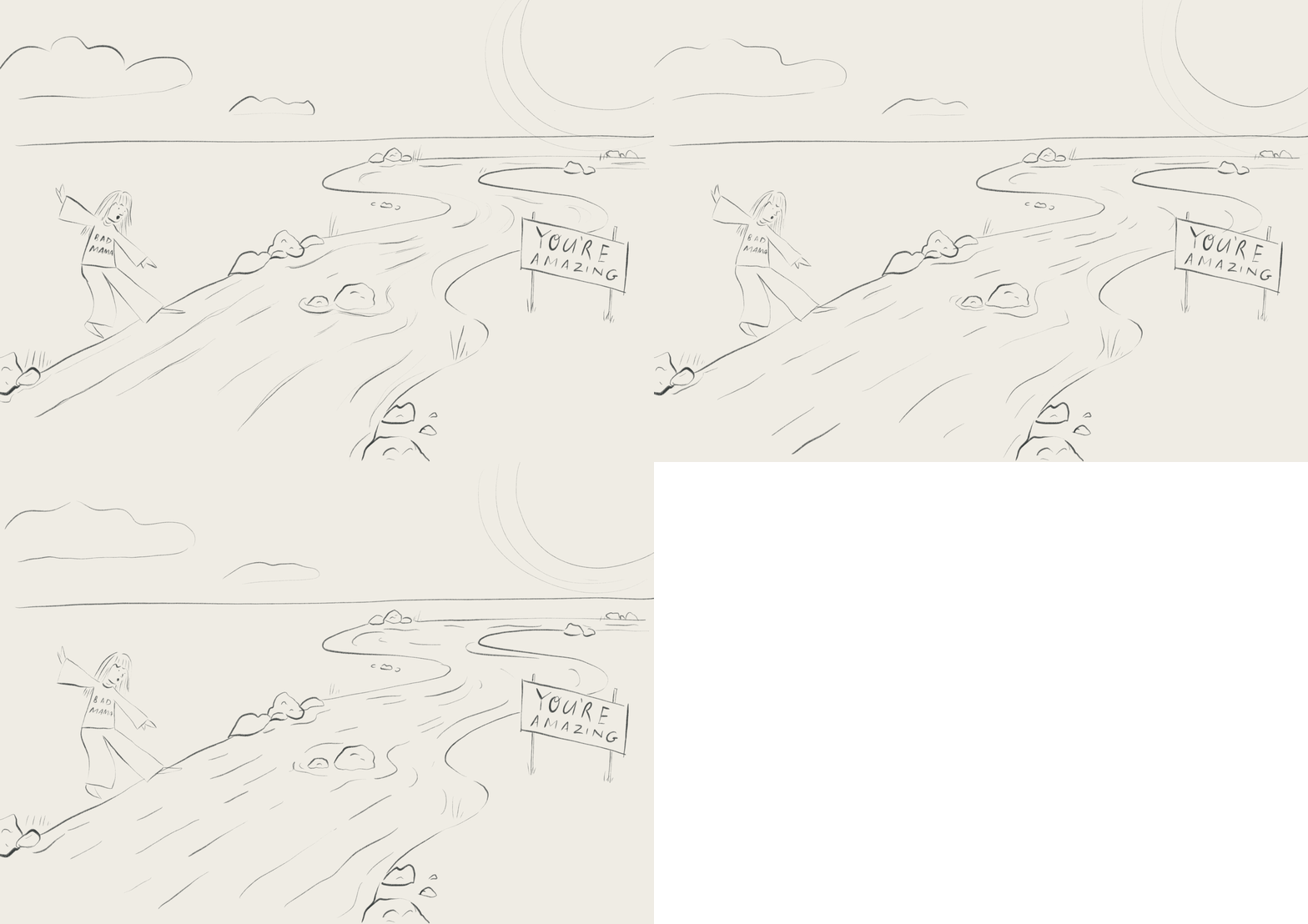
Our brains are built to reward achievement. Perfectionism goes against nature by constantly moving the goal posts. For neurodivergent brains we set the bar even higher.
Women (especially late-diagnosed) carry an extra layer of shame and self-criticism built up over years. Inevitably it can feel like we're failing. We're so exhausted and overwhelmed that our parenting doesn't live up to our high standards.
Cue “I’m such a bad mum”. And the guilt and shame just pile up.
For many years after becoming a mother, I built up the belief that I wasn’t good enough to be a parent. That my children deserved better. And with no ADHD diagnosis at that time, the beliefs were built on foundations of low self-worth and feeling broken.
I tried so hard to be the “perfect parent”, but the more I feared failure the more I failed. Burning out and experiencing chronic anxiety. I was eventually diagnosed with maternal OCD (a story for another day).
How can our brains ever celebrate achievements when we are forever changing the goal posts?
The Brain Detects Bulls*it
Can positive affirmations break the negative loops? Going from “I’m a bad mum” to “I’m an amazing mum” usually won't cut it for perfectionists.
This is not about pessimism or being weak-minded. It’s because of the Anterior Cingulate Cortex (ACC).
The ACC is the region of the brain that monitors for errors. It’s basically our brain’s bulls*it detector and survival mechanism and is overactive with perfectionists.
It’s detecting a humungous gap between “I’m an amazing mum” and the core belief of “I’m a bad mum”. It’s just too big a leap.
Why “Good Enough” Works
“Good enough” is a bridge affirmation. A realistic statement that the brain is happy to accept.
D.W. Winnicott Introduced the idea of the "good enough mother" in 1953. Believing that the “good enough” parent was superior to the “perfect parent”.
“Good enough” creates space. Allowing all truths to exist and imperfection to breathe. The ACC gets to chill out, lowering the stress response.
Using a bridge affirmation such as “good enough” also lowers the threshold for achievement, which in turn gives us that much needed dopamine boost us ADHDers crave.
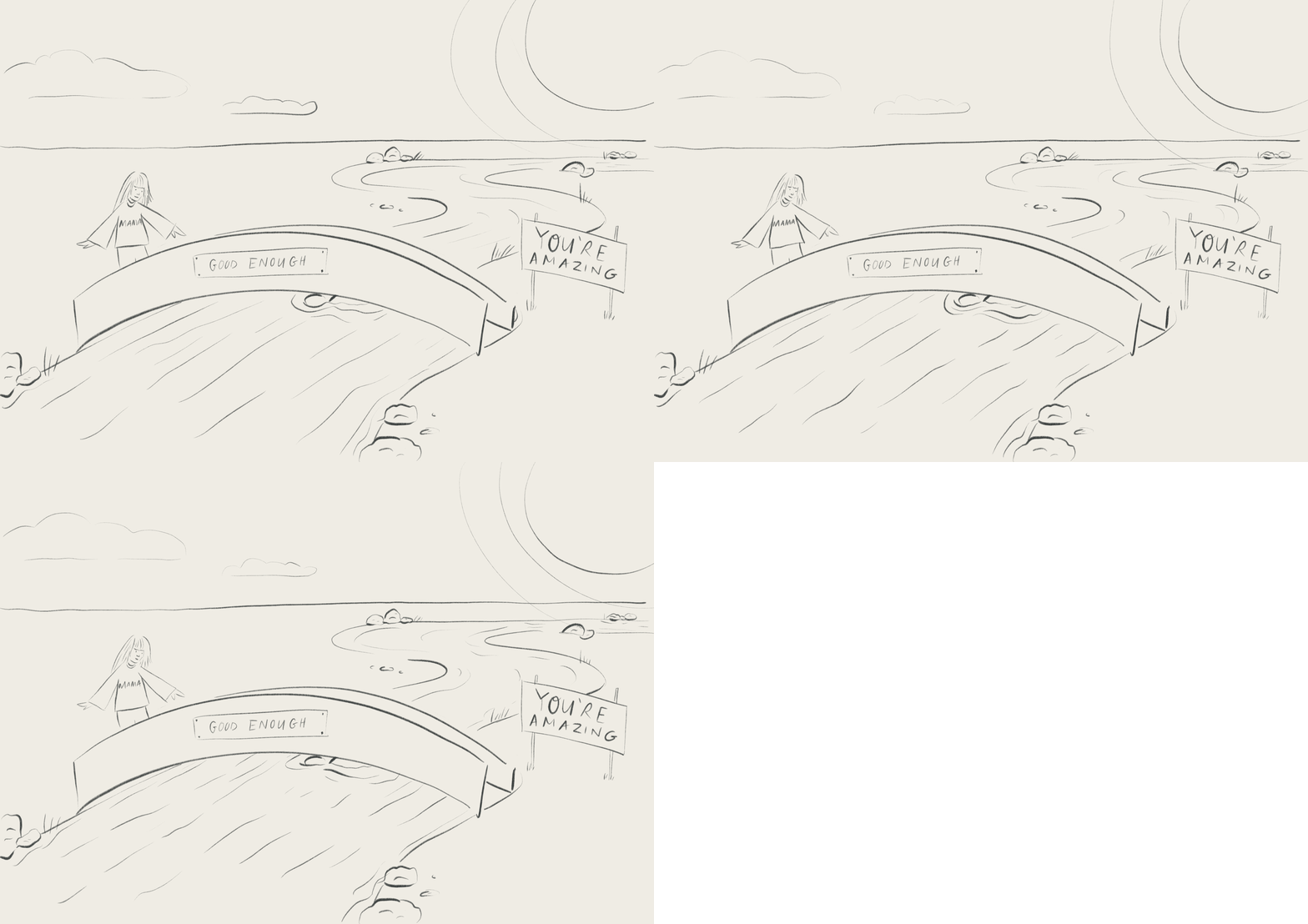
The idea of “I am good enough” gives me the wriggle room I need to find a little self-compassion.
Self-criticism and self-compassion work in separate neural pathways, which means that every time you practice self-compassion you’re building resilience and actively making the voice of self-criticism quieter rather than trying to eliminate it.
Self-compassion quietens the amygdala (responsible for the stress response). Bringing the Pre Frontal Cortex (PFC), the part of the brain that regulates thinking and planning to come back online.
So what can “good enough” look like in practice? There are many approaches and models out there (I’ve listed some resources below). But here is a simple framework that could work.
Catch the negative thought:
“I shouted at my child, I’m a bad mother”
Remind yourself that this is a learnt thought:
“This is a learnt belief to adapt to difficult situations, this is not fact”
Find your bridge statement:
“I am a good enough mother”
Book end it with a small, simple truth:
“I praised my child this morning”, “I played Lego with my child earlier”
Steer yourself towards your values:
This is one small action that brings you back to your values. This might look like..
Taking three deep breaths: “It’s important to me to regulate myself.”
Hug and apologise to my child: “ My child needs a real person as a role model, not a perfect one. I do this by repairing and reconnecting after dysregulation”
Make a cup of tea: “It’s important to show acts of kindness to myself.”
Most importantly it’s not that you’re giving up and it does’t have to mean lowering your standards. You still get to keep your values, just with a more supportive framework that allows you to accept your imperfections. This stuff takes time, but with a little patience and faith you’ll get there.
Lou xxx
Everything I share here comes from my own lived experience and personal research as a neurodivergent woman, mother and ADHD coach. While I am happy to support you within my scope of practice, I am not a medical professional or therapist, and nothing in this article constitutes medical or therapeutic advice.
This space welcomes all mothers, biological, adoptive, step, foster, and every variation in between. Some content will specifically address experiences of those assigned female at birth (such as menstrual cycles, perimenopause and menopause).
If you’re curious about working together, I offer one-to-one coaching helping mums manage the beautiful chaos of ADHD life, as well as building sustainable creative practices for wellbeing. You can find out more here.